
The rising defense-technology company’s participation in Falcon Peak 26.2 reinforces Southwest Arizona’s position as a premier destination for aerospace, autonomous-systems and counter-UAS testing.
In aerospace and defense, advanced technology is only as valuable as its ability to perform under real-world conditions. That is why companies need more than open space—they need controlled airspace, sophisticated instrumentation, operationally relevant scenarios and immediate performance feedback.
Perennial Autonomy recently found those capabilities at U.S. Army Yuma Proving Ground.
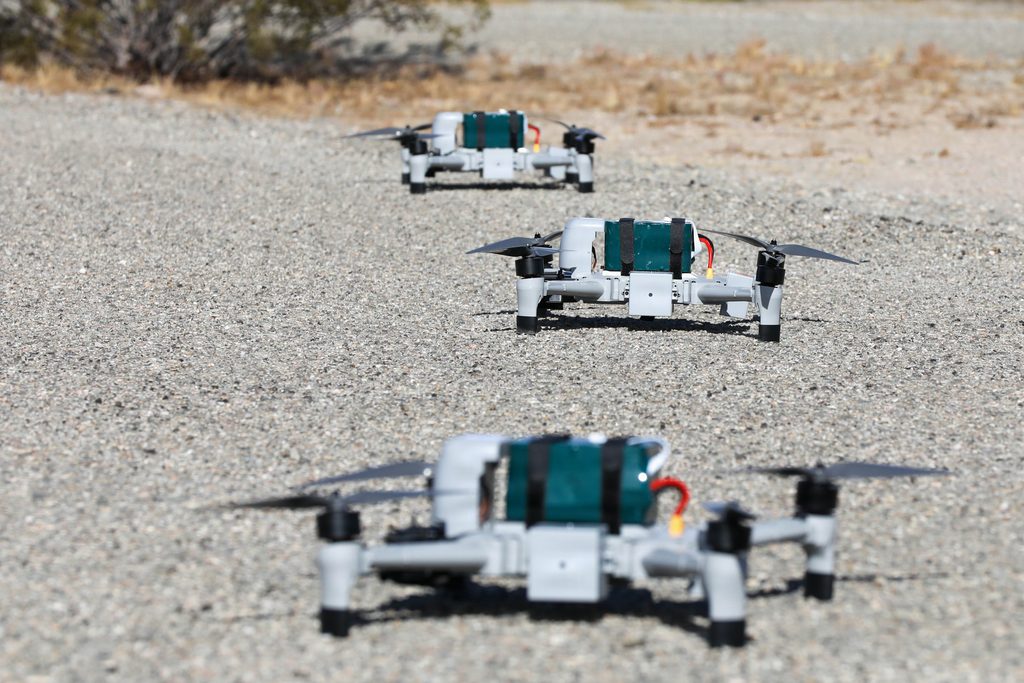
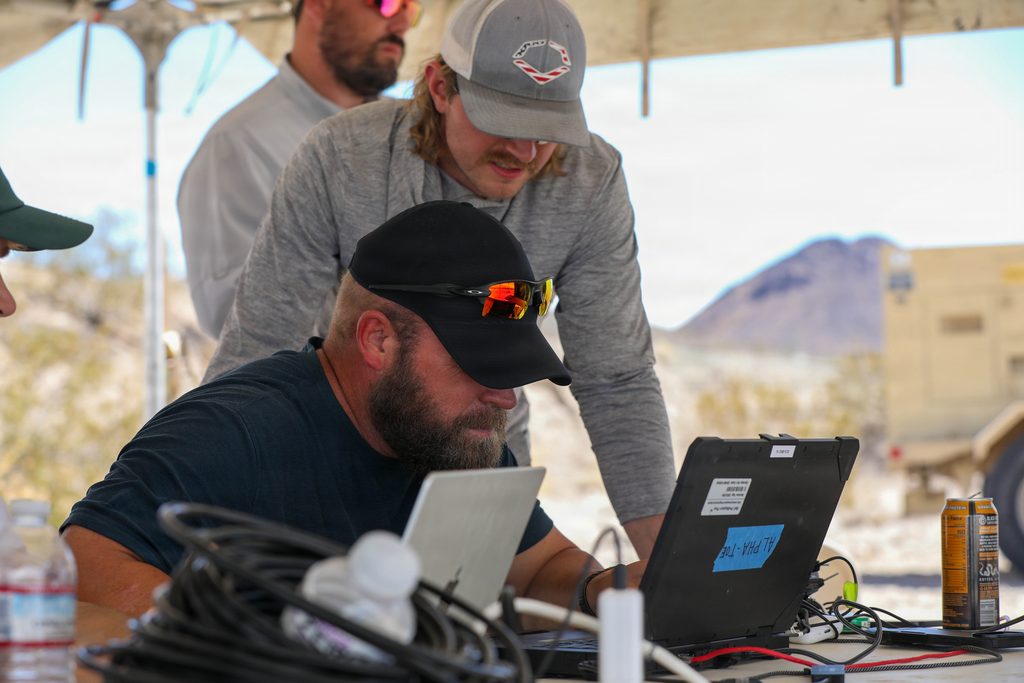
Members of the company’s team prepared, launched and operated a drone while reviewing performance data during Falcon Peak 26.2, a counter-small unmanned aircraft systems experiment conducted at YPG’s Cibola Range in September 2026.
The event brought together technology developers, operational warfighters and government partners to evaluate emerging counter-UAS capabilities against evolving aerial threats. Participating systems were assessed using standardized military test criteria, giving developers actionable data to improve performance and help inform future acquisition decisions.
A Fast-Rising Company Tests in Yuma
Founded in 2023, Perennial Autonomy has quickly become a prominent name in autonomous defense technology. The company combines artificial intelligence, computer vision, jam-resistant communications and combat-informed engineering to develop systems for counter-UAS, reconnaissance and strike missions.
Its platforms include Merops interceptors, Bumblebee quadcopters and Hornet fixed-wing systems engineered to operate in complex and GPS-denied environments.
In May 2026, Perennial Autonomy announced a three-year, enterprise-wide contract with a ceiling of $500 million to provide its autonomous counter-UAS technologies across the U.S. military. The agreement was coordinated by Joint Interagency Task Force 401, the same organization involved in Falcon Peak 26.2.
For Southwest Arizona, Perennial’s presence at YPG sends a powerful message: one of the defense industry’s most closely watched autonomy companies came to Yuma to put its technology to work.
Other aerospace and defense companies can do the same.
A Testing Environment Built for Aerospace Innovation
Yuma Proving Ground offers a combination of assets that is difficult to replicate elsewhere. The installation encompasses more than 1,300 square miles of test terrain and nearly 2,000 square miles of restricted airspace, providing room to evaluate unmanned aircraft, autonomous systems, sensors, electronic countermeasures and other emerging technologies.
Clear skies, low humidity and limited weather disruptions support year-round operations. YPG’s remote desert environment also allows companies to conduct demanding tests away from urban encroachment and congested commercial airspace.
Those natural advantages are paired with specialized ranges, advanced instrumentation and experienced testing personnel. Developers can measure how a system performs, identify weaknesses and make informed engineering decisions based on reliable data.
Falcon Peak 26.2 further expanded that capability by establishing enduring counter-UAS testing and evaluation lanes at YPG. These lanes will remain available to support continued collaboration among industry, military users and government acquisition partners.
As JIATF-401 Director Brig. Gen. Matt Ross explained, “Companies can come directly to the range, receive immediate feedback, iterate on their systems, and rapidly deliver improved tools to our service members.”
That ability to test, learn and refine technology quickly is increasingly important in an industry where threats, mission requirements and autonomous capabilities are evolving at unprecedented speed.
From Development to Deployment
Yuma’s value extends beyond its physical range.
The region offers access to military and veteran talent, aviation infrastructure, industrial sites and a growing aerospace and defense ecosystem. The Yuma Defense Contractor Complex at Yuma International Airport provides aviation-focused space with direct taxiway access, multiple runways and opportunities for research, maintenance, manufacturing and operational support.
Together, these assets give companies the ability to do more than conduct a single test. They create a pathway for continued research, validation, production and expansion within the same business-ready region.
Perennial Autonomy’s work during Falcon Peak demonstrates what that environment can make possible. Its team was able to operate equipment, examine data and participate in an exercise designed to accelerate the maturation of next-generation defense capabilities.
For companies developing UAS, counter-UAS, autonomous platforms, sensors or other mission-critical aerospace technologies, the takeaway is clear: Yuma is ready for what comes next.
If one of the industry’s fastest-rising autonomy companies can test here, your company can too.